

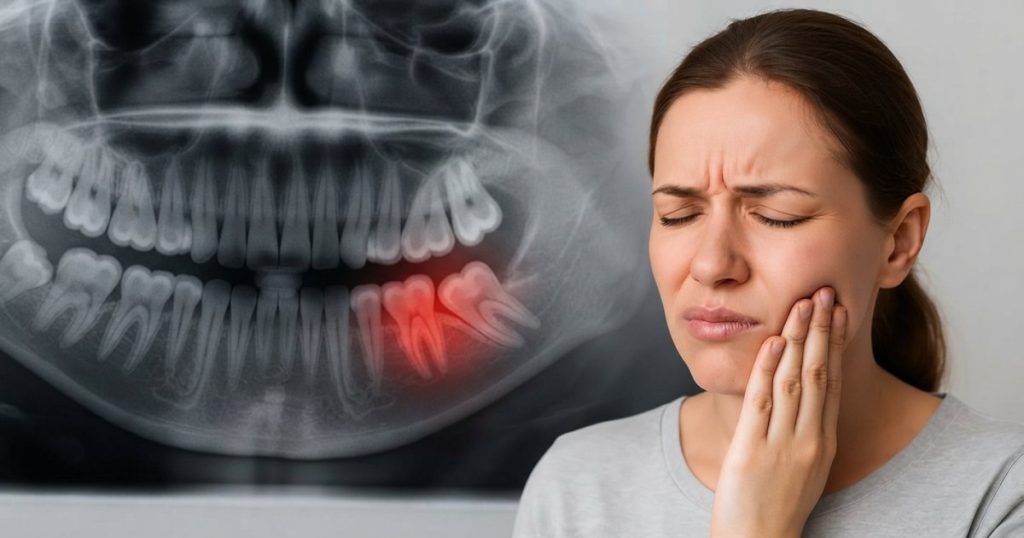
Wisdom tooth pain does not automatically mean the tooth has to come out. The real decision depends on what is causing the pain, the position of the tooth, and what a clinical exam and X-ray show. Pain can stem from an impacted or partially erupted wisdom tooth, infection, decay, or inflammation.
Even if the discomfort fades for a while, the underlying issue may still be there. This guide walks you through the key signs so you can better understand your situation and know what to discuss with your dentist.
Quick Check for a Wisdom Tooth Pain Emergency
Use this simple table to quickly get a sense of how urgent your situation might be:
| What you’re noticing | What it may mean |
| Mild pain that is improving | May be temporary, but monitor it |
| Pain that keeps coming back | Needs a dental assessment |
| Pain + swollen or inflamed gum | Could indicate infection or pericoronitis |
| Partially erupted or impacted tooth + pain | More likely to need treatment |
| Pain + decay or damage to the nearby tooth | May make extraction necessary |
| Facial swelling, fever, pus, or worsening symptoms | Seek urgent dental care |
| Difficulty swallowing or breathing | Emergency assessment is needed |
This checklist is not a diagnosis. A dentist may need to examine the tooth and take an X-ray to determine what is causing the pain.
When You May Need an Extraction
Not every ache at the back of your mouth means the wisdom tooth has to come out. But certain patterns and findings make removal the more reliable long-term solution.
Extraction is often recommended when you have:
- Recurrent pain or infection that keeps returning even after the discomfort settles for a while
- An impacted or partially erupted wisdom tooth that traps food and bacteria under the gum
- Decay in the wisdom tooth itself, especially if it cannot be predictably restored
- Damage to the adjacent second molar (decay or bone loss caused by the wisdom tooth pressing against it)
- Gum disease, ongoing inflammation, or recurrent pericoronitis around the tooth
- A cyst or other pathology visible on an X-ray
A key point about pericoronitis (the common gum infection around a partially erupted wisdom tooth):
A single mild episode does not automatically mean the tooth must be removed. According to NICE guidance, a first episode is usually managed with cleaning and care rather than immediate surgery (unless it is particularly severe). However, second or subsequent episodes are more likely to tip the decision toward extraction because the underlying trap for bacteria remains.
In short, when the same problem keeps coming back, or when an X-ray shows the tooth is harming the neighbouring molar or creating a cyst, removal is often the clearest way to stop the cycle.
Related topic: Cracked Tooth Emergency: When Is It a Dental Emergency?
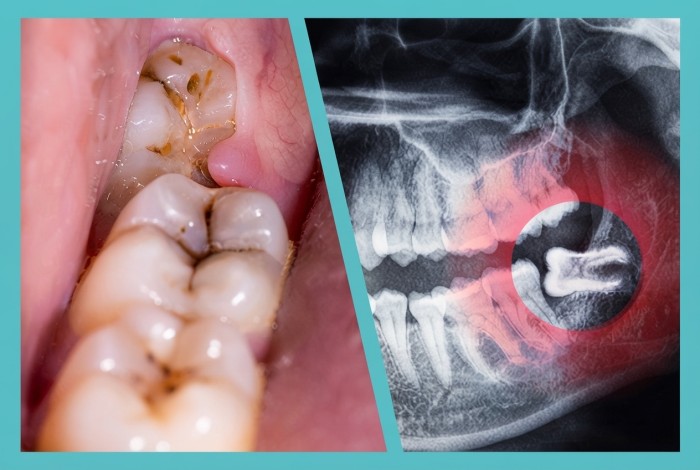
When a Painful Wisdom Tooth Can Be Saved
In some cases the tooth can stay, as long as it meets a few clear conditions:
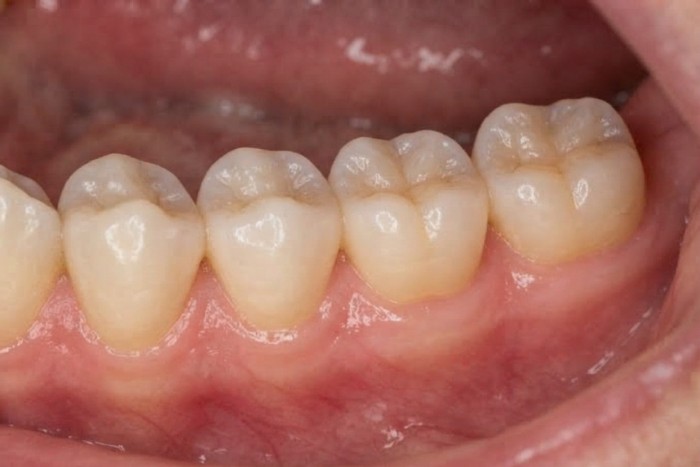
- Fully erupted
- Healthy and free of decay
- Functional (it meets its opposing tooth properly)
- Properly positioned in the arch
- Easy to clean with regular brushing and flossing
- Not causing damage to the neighbouring second molar or surrounding bone and gum
Mild pain or discomfort does not automatically mean extraction is required. Sometimes the problem is temporary inflammation that settles with better cleaning, a short course of care, or professional cleaning of the area. It’s also useful to know how often you should get a dental cleaning.
The decision always comes down to the individual tooth and what the examination and X-ray reveal. Your dentist can help you weigh if keeping and watching the tooth is a safe, realistic option in your case, or not.
Read more: Why Your Gum Health Is More Important Than You Think
Why Isn’t Wisdom Tooth Extraction Always Necessary?
The Ontario Dental Association notes that the decision to remove wisdom teeth depends on current problems as well as the likelihood of future complications.
Extraction is not risk-free. Possible complications include dry socket, infection, and, more rarely, injury to nearby nerves or other structures. That is why the potential benefit of removing a wisdom tooth should be weighed against the risks of the procedure. For this reason, preventive removal of a pathology-free impacted wisdom tooth is not universally recommended.
Impaction on its own is not a reason to remove the tooth. If an impacted wisdom tooth shows no signs of pathology (no infection, no decay, no cyst, no damage to the tooth next to it), we also recommend active monitoring rather than automatic removal.
Get the Right Care for Your Wisdom Tooth Pain
Wisdom tooth pain can have different causes, and extraction isn’t always the answer. Get your tooth examined at Lisgar Park Dental and find out what’s causing the pain and which treatment options make sense for your situation.
Book Your Wisdom Tooth Assessment
When Is Wisdom Tooth Pain an Emergency?
Most wisdom tooth pain can wait for a regular dental appointment. Some signs, however, mean you should seek care the same day:
- Facial or jaw swelling
- Fever
- Pus or discharge around the tooth
- A persistent bad taste that does not clear with rinsing
- Difficulty opening your mouth fully
- Difficulty swallowing
- Difficulty breathing
- Pain that is rapidly getting worse
Urgent dental care does not always mean the tooth will be removed right away. The first priority is usually to assess the problem and get any infection under control. Once the acute issue is managed, we can discuss the next steps, including extraction, with you.
What Can You Do Before Your Appointment?
While you wait to see your dentist, these simple steps can help ease discomfort:
- Keep the area as clean as possible
- Rinse gently with warm salt water a few times a day
- Avoid hard, sticky, or very hot foods that irritate the area
- Take over-the-counter pain relief if it is suitable for you, following the package directions or your doctor’s advice
Note: Pain relief can reduce discomfort, but it does not treat an underlying infection, decay, or impaction. If the pain settles, do not assume the problem has resolved; we still recommend you have the tooth checked.
Learn more: How to Get Rid of a Toothache at Night: Causes & Fast Relief
Treating Wisdom Tooth Pain at Lisgar Park Dental
At Lisgar Park Dental, we start by assessing the cause of your wisdom tooth pain rather than assuming the tooth needs to be removed.
- We examine the tooth and surrounding gum for swelling, inflammation, decay, and how far the tooth has erupted.
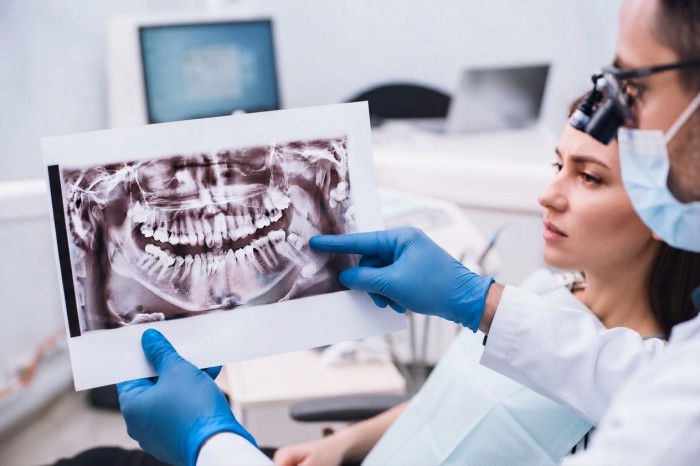
- If needed, X-rays can show the tooth’s position, whether it is impacted, the shape of its roots, the surrounding bone, and any effect on the neighbouring second molar.
- From there, we consider whether the tooth can be kept healthy long-term, whether there is a clear problem that requires treatment, whether the issue keeps returning, and whether the tooth can be treated without extraction.
If extraction is recommended, Lisgar Park Dental provides both simple and surgical tooth extractions, including wisdom tooth removal and aftercare guidance, under the supervision of Dr. Doust, a 2011 DDS graduate and member of the RCDSO, CDA, and ODA,
Lisgar Park Dental accepts most major dental insurance plans with direct billing, and the clinic also lists CDCP and payment options for patients looking for more affordable care.
You can book an examination at Lisgar Park Dental by calling us at (647) 370-0590 or visit the clinic at 68 Abell St Unit RT3, Toronto, ON M6J 0B1, near Queen Street West and Lisgar Park.
FAQ
Can wisdom tooth pain go away on its own?
Yes, mild eruption pain or a single mild episode can settle. Recurrent or infection-related pain usually needs assessment.
Does wisdom tooth pain always mean extraction?
No. Pain alone does not mean the tooth must come out. The cause and clinical findings decide the best approach.
How do I know if my wisdom tooth is infected?
Look for swelling, redness, pus, bad taste, fever, or difficulty opening your mouth. A dentist can confirm it.
What happens if I don’t remove a painful wisdom tooth?
The problem may return, worsen, or damage the neighbouring tooth. Monitoring or treatment depends on the findings.
How long can wisdom tooth pain last?
Eruption discomfort may last days to weeks. Pain from infection or impaction often continues until treated.
What is pericoronitis?
It is inflammation or infection of the gum around a partially erupted wisdom tooth, often causing pain and swelling.
Is it better or easier to remove wisdom teeth early?
Removal can be simpler in younger adults due to less developed roots, but age alone is not a reason to extract a healthy tooth.
Will removing a wisdom tooth affect my other teeth or bite?
It rarely changes your bite. The goal is usually to protect the neighbouring tooth from ongoing damage or infection.
Have you had wisdom tooth pain before, or are you wondering if yours needs to come out? Share your experience, questions, or concerns in the comments.
