


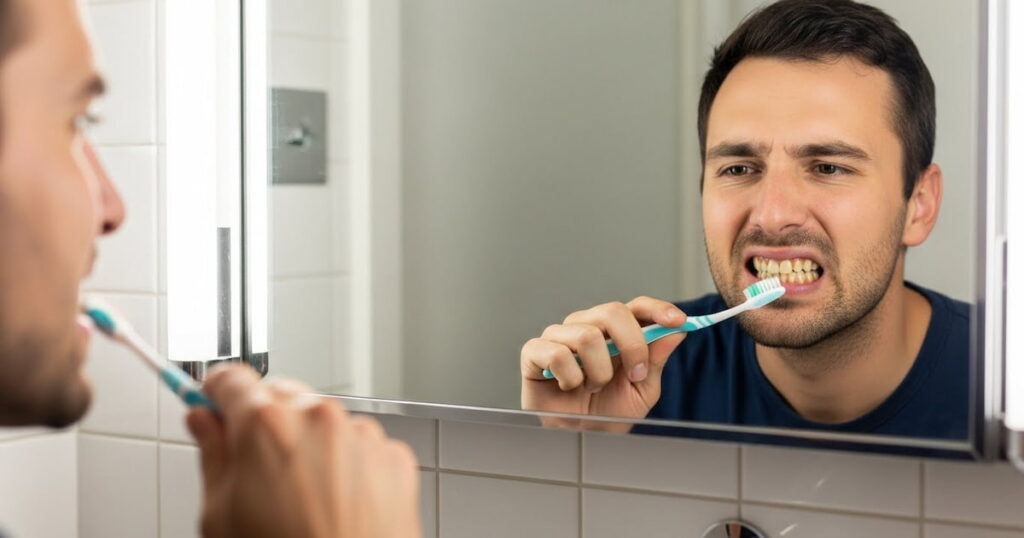
If you brush your teeth every day yet still notice yellowing, you’re not alone. Many people believe daily brushing guarantees a bright smile, but the reality is more complex. Tooth discoloration happens for many reasons; some inside the tooth, some outside, and some caused by habits we don’t realize are harmful.
In this guide, you’ll learn exactly what makes teeth lose their brightness, what you can do about it, and why professional teeth whitening is often the safest, most effective solution.
Why Your Teeth May Become Yellow Despite Brushing
Even with great brushing habits, many factors influence your tooth colour. Some happen naturally as you age, while others come from lifestyle and diet. Brushing only removes surface-level plaque, not deeper stains or natural colour changes. Foods and drinks like coffee, tea, and berries can leave pigments on enamel, while aging and genetics may cause enamel to thin, allowing the naturally yellow dentin underneath to show through.
Moreover, lifestyle habits, medications, smoking, and even brushing too hard can also contribute to discoloration. In many cases, daily brushing isn’t enough to combat these factors, which is why professional cleanings and whitening treatments are often needed to restore a bright smile.
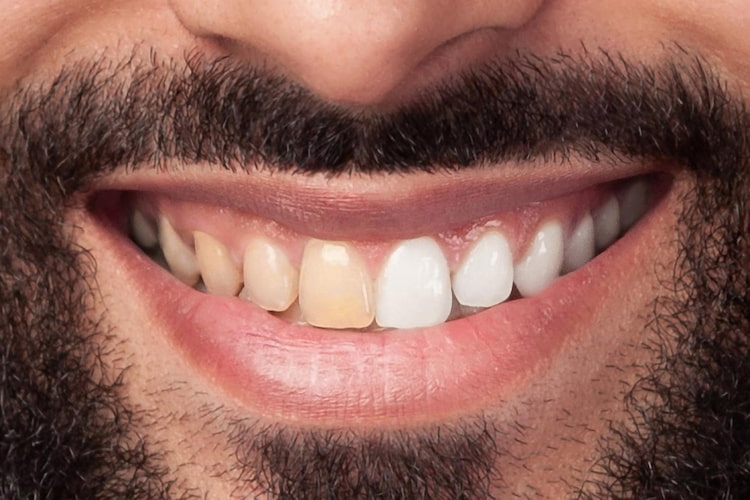
To better understand the causes of your yellow teeth, first, let’s explore the difference between your natural enamel colour and staining.
Natural Tooth Colour vs. Staining
Your natural tooth colour isn’t pure white. Teeth are made of dentin, a yellowish material underneath the enamel. Some people have slightly darker dentin due to genetics, and that’s not something brushing can change.
Stains fall into two categories:
- Extrinsic stains: On the outer enamel surface
- Intrinsic stains: Inside the tooth, beneath the enamel
Brushing can remove some extrinsic stains, but it cannot reach intrinsic ones. This is why people with naturally darker dentin or internal discoloration don’t see whitening progress from brushing alone.
The Role of Enamel Thinning in Tooth Colour
Enamel is the white outer coating of the tooth. Over time, it becomes thinner due to acidic foods and drinks, aggressive brushing, natural aging, and grinding or clenching.
When enamel thins, the yellow dentin underneath becomes more visible. Even perfectly clean teeth can look yellow simply because the enamel layer is no longer as bright or thick.
Here’s a quick visual comparison:
| Condition | Effect on Tooth Colour | Can Brushing Fix It? |
| Extrinsic stains | Surface-level yellowing | Sometimes |
| Intrinsic stains | Colour changes inside the tooth | No |
| Enamel erosion | More dentin shows through | No |
Common Causes Your Teeth Turn Yellow Even With Good Oral Hygiene
Now that you can distinguish between staining and the tooth’s natural discolouration, it’s time to understand the common causes of each type of tooth staining. This way, you can easily find a solution for your discoloured teeth and prevent them in the future.
Extrinsic Stains
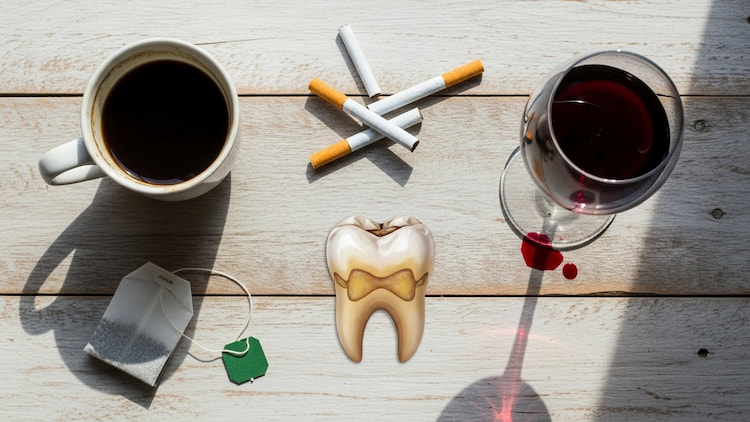
Coffee, tea, red wine, and dark sodas contain pigments called chromogens. These stick to the enamel and gradually darken it. Even one or two cups per day can make a big difference.
Smoking and vaping also cause stubborn brown or yellow stains due to tar and nicotine. These stains penetrate deeply and often require professional cleaning to remove.
Worth Reading: The Difference Between Deep Cleaning and Regular Cleaning
Intrinsic Stains
Intrinsic stains develop inside the tooth. They cannot be brushed away because they affect the dentin layer. Common internal discoloration causes are as follows:
- Some antibiotics (like tetracycline) taken during childhood
- Fluorosis, caused by excessive fluoride exposure during enamel development
- Dental trauma, which may cause the tooth to darken from the inside
Professional whitening may help, but in some cases, veneers or bonding work better. We’ll discuss that later on.
Lifestyle Factors
Your everyday lifestyle has a major impact on the colour of your teeth, even if you maintain good brushing habits. What you eat and drink plays a big role; foods like berries, curry, and tomato sauces contain strong pigments that easily stain enamel, while acidic choices such as citrus fruits and sodas weaken enamel over time, making yellow dentin more visible.
Aging is also a natural factor, leading to tooth discoloration because enamel gradually thins as you get older, and the dentin underneath becomes thicker and darker. Genetics can influence your tooth colour, too. These lifestyle and biological factors work together to affect your smile, which is why whitening and stain prevention often require more than brushing alone.
Brushing Mistakes That Make Stains Worse
Even good brushing habits can be counterproductive if done incorrectly. Here are some affecting factors to keep in mind:
- Brushing too hard erodes enamel
- Using a hard-bristle toothbrush scratches the tooth surfaces
- Skipping flossing allows plaque between teeth to turn yellow
- Not changing your toothbrush frequently leads to ineffective cleaning
Reminder: A gentle technique with a soft-bristle brush is far more effective than forceful brushing.
Book Your Teeth Whitening Appointment Today!
At Lisgar Park Dental, our team offers gentle cleanings and advanced whitening treatments designed to brighten your smile safely. Book your consultation today and take the first step toward a more confident you.
How to Prevent Teeth from Turning Yellow
Prevention is easier than fixing discoloration later. A few thoughtful changes can make a big difference in keeping stains away. Here’s what works best:
- Rinse with water after drinking coffee or tea to remove pigments before they set
- Use a fluoride toothpaste to strengthen enamel
- Add more crunchy fruits and vegetables (like apples and carrots), which naturally scrub the teeth
- Drink through a straw when consuming dark beverages
- Floss daily to remove plaque in between teeth
- Schedule regular dental cleanings every 6 months
The Best and Safest Tooth Whitening Option
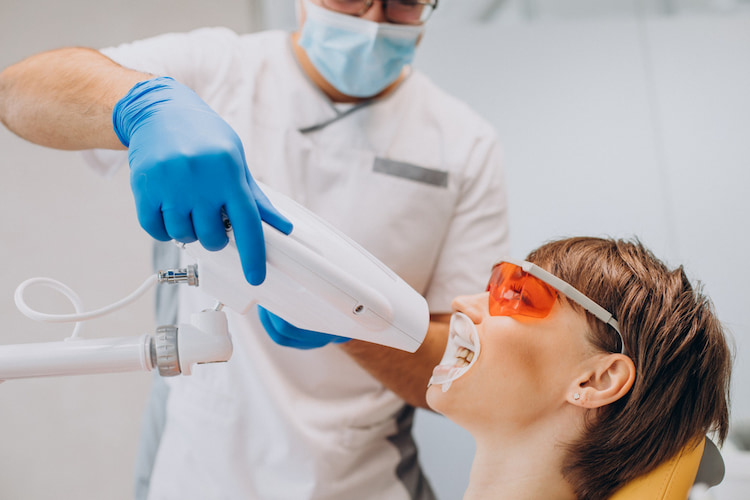
Professional teeth whitening is the safest, fastest, and most reliable way to brighten your teeth, especially when brushing alone isn’t enough. Dentists use controlled techniques and high-concentration whitening agents that penetrate enamel safely without damaging the tooth structure. Unlike over-the-counter products, professional whitening delivers consistent, predictable results.
When Is Whitening Not Recommended?
You may need an alternative if you have deep intrinsic stains that whitening can’t lift, active decay or gum disease, severe enamel erosion, tooth sensitivity that requires treatment first, or dental restorations (crowns, veneers, dental fillings) that won’t change colour.
When whitening isn’t right for you, our dentists can recommend solutions such as dental bonding, veneers, or composite restorations. Moreover, for discoloured dental work, your dentist may need to replace your fillings, crowns, or veneers.
Not sure if you have gum problems? Find out here: All Gum Disease Symptoms You Should Keep an Eye on
Stop Letting Your Teeth Turn Yellow Even When You Brush Daily
Yellow teeth can be frustrating, especially when you’re doing everything “right.” But brushing is only one part of the equation. Diet, enamel thickness, lifestyle habits, and internal discoloration all play a role in tooth colour. The good news is that modern dentistry offers safe, effective solutions tailored to each person’s needs.
At Lisgar Park Dental, we provide professional cleanings in Toronto, advanced whitening treatments, and personalized care to help you achieve a bright, confident smile. Whether you’re looking for a simple touch-up or a complete smile transformation, our team is here to guide you. Call us today or book your appointment online. Your brighter smile is closer than you think.
FAQ
-
Why are my teeth yellow even though I brush twice a day?
Brushing removes plaque, but it can’t fix deeper causes like enamel thinning, intrinsic stains, or pigment-heavy foods and drinks. You may need professional cleaning or whitening.
-
Does whitening toothpaste actually work?
Whitening toothpaste removes mild surface stains, but it won’t change the natural colour of your dentin. For noticeable results, professional whitening is more effective.
-
Can yellow teeth return after whitening?
Yes, but you can maintain your results for years with good habits, like rinsing after staining foods, limiting coffee, and visiting your dentist regularly for cleanings.
-
Is professional whitening safe for sensitive teeth?
Yes. We use techniques and materials designed to minimize sensitivity. We can also treat sensitivity before whitening if necessary.
-
Should I whiten my teeth at home or at the dentist?
At-home kits can help, but in-office whitening is safer, faster, and produces more dramatic results. Dentists can customize your treatment to avoid irritation or uneven results.
Do you have a question about yellow teeth or whitening treatments? Drop your question in the comments. We love helping our patients learn and feel confident!
