

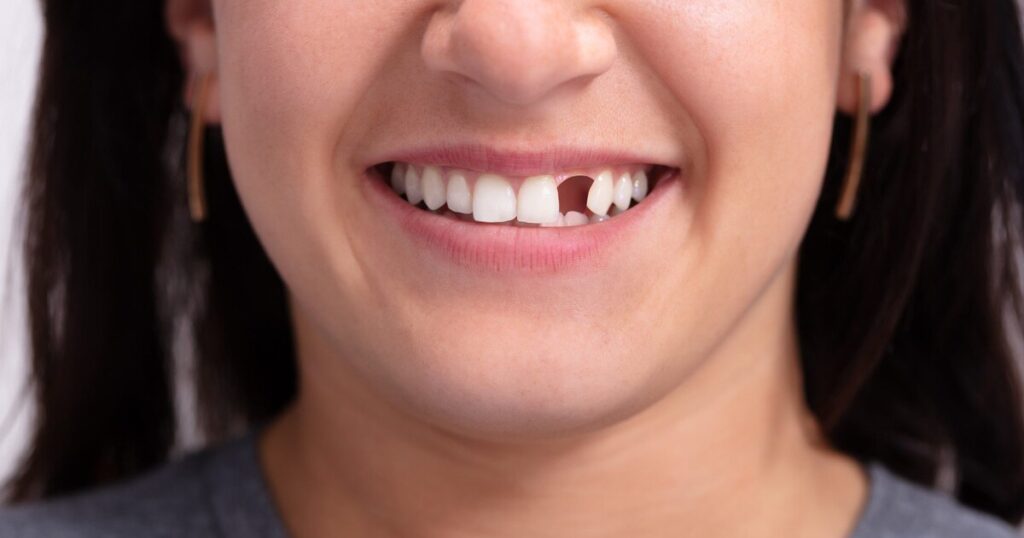
A missing tooth can affect much more than your appearance. Over time, it may cause jawbone loss, neighboring teeth to shift, bite misalignment, and difficulty chewing. Replacing a missing tooth as soon as possible helps preserve your oral health, restore normal function, and maintain a healthy, confident smile.
Whether you’re considering dental implants, dental bridges, or dentures, understanding the advantages of each treatment is essential. In this comprehensive guide, you’ll explore the most effective missing tooth replacement options, compare their benefits and drawbacks, and find the best solution for your long-term oral health and lifestyle.
Why Replace Missing Teeth? Understanding the Impact
Missing a tooth is more than a cosmetic concern; it can trigger a series of oral health problems. Without stimulation from the tooth root, the jawbone gradually loses density, potentially altering facial structure over time. Adjacent teeth may shift into the gap, affecting bite alignment and making chewing uncomfortable. Speech can also be impacted, especially when front teeth are missing.
Left untreated, these changes increase the risk of further tooth loss and reduce overall function and confidence. Replacing a missing tooth early helps preserve bone health, maintain proper alignment, and protect your natural facial contours.
Top Tooth Replacement Options for Missing Teeth
When a tooth is lost, several clinically proven solutions can restore function and appearance. The primary options include dental implants, dental bridges, and dentures (partial or full), each with distinct advantages and considerations. Below, we outline these options in detail.
1. Dental Implants: The Most Durable Solution
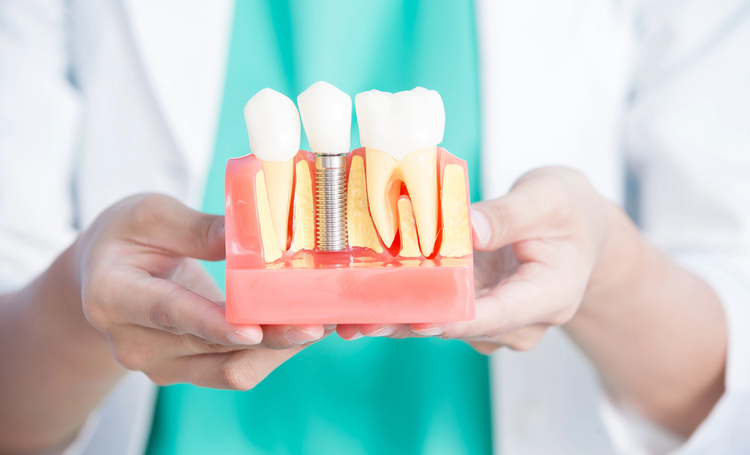
Dental implants are one of the strongest and most long-lasting ways to replace a missing tooth. A small titanium screw is placed into the jawbone during a minor surgical procedure. Over time, the bone naturally grows around and bonds to the implant (a process called osseointegration), creating a solid base that works like a natural tooth root. This bonding process helps stop jawbone shrinkage, preserves bite strength, and maintains facial structure.
Research Data: According to a 2024 meta-analysis published in Clinical Oral Investigations, dental implants show survival rates often exceeding 95% over long-term follow-up (PMC).
With proper oral hygiene and maintenance, implants can function for decades. Unlike bridges or dentures, they do not depend on adjacent teeth for support, which helps preserve overall tooth structure.
Materials Used (Titanium vs. Zirconia)
Most implants are made of titanium due to its strength, durability, and proven biocompatibility. Zirconia (a ceramic alternative) may be used for metal-free or aesthetic preferences, especially in visible areas. Titanium remains the gold standard because of its long clinical track record.
Bone Grafting (When Needed)
If the jawbone lacks sufficient density, a bone graft may be required before implant placement. Grafting rebuilds lost bone to ensure long-term stability and reduce the risk of failure.
Abutment and Crown
After healing (typically several months), an abutment connects the implant to a custom-made crown. The final result looks, feels, and functions like a natural tooth, without movement or slipping.
2. Dental Bridges: A Fixed Alternative
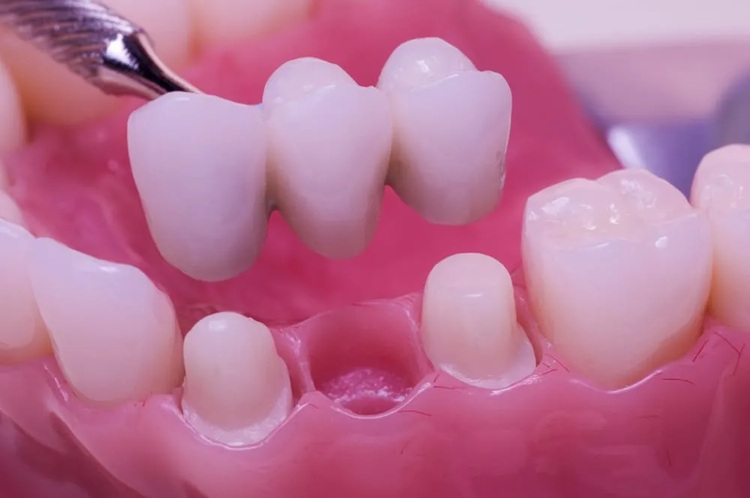
Dental bridges are a reliable, non-surgical solution for replacing one or more missing teeth. A bridge uses artificial teeth (pontics) to fill the gap and is supported by crowns placed on the natural teeth beside the space (abutment teeth). The procedure involves reshaping the supporting teeth, taking impressions, and bonding the custom-made bridge in place. Because no surgery or healing period is required, bridges are typically faster and less invasive than implants.
Benefits of dental bridges:
- Restore chewing efficiency
- Improve speech when gaps affect pronunciation
- Prevent adjacent teeth from shifting
- Maintain facial balance by filling the space
Limitations and Longevity
Bridges depend on healthy neighboring teeth, which must be reshaped (an irreversible process). In this context, you may also want to learn more about dental fillings and their maintenance (Dental Fillings: Failure, Causes & Signs).
Unlike implants, bridges do not prevent bone loss in the missing tooth area.
Research Data: Regarding durability, a systematic review published in PubMed reports survival rates of approximately 90–95% at 5–10 years, depending on materials and clinical conditions.
Long-term success depends heavily on oral hygiene, as decay under crowns or gum disease around abutment teeth can compromise the restoration. Dental bridges are a strong fixed alternative when implants are not feasible due to bone limitations, financial considerations, or patient preference to avoid surgery (always determined through individual clinical evaluation).
3. Dentures and Partial Dentures: Removable Options
Dentures are removable appliances used to replace missing teeth and restore chewing, speech, and appearance, especially when implants or bridges are not suitable or preferred.
There are two main types:
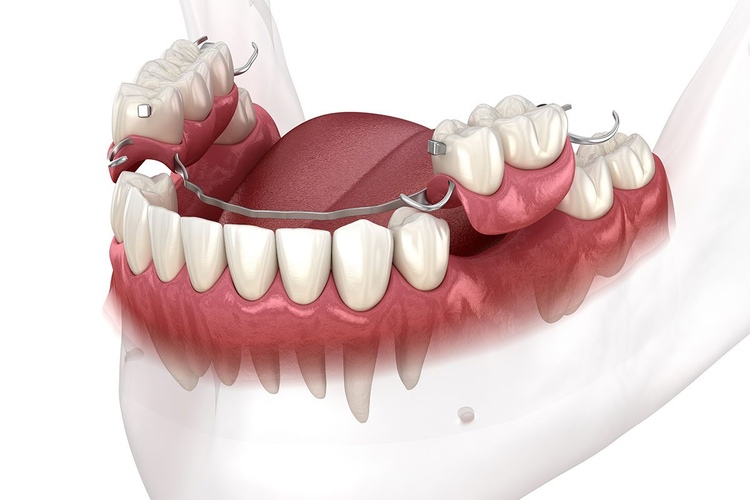
- Complete (Full) Dentures: Replace all teeth in the upper or lower jaw after remaining teeth are removed and gums have healed.
- Partial Dentures: Replace several missing teeth while preserving natural ones. They attach using clasps or metal frameworks and may sometimes require crowns on supporting teeth for better stability.
The process involves taking impressions, creating custom models, and fitting the appliance. Minor adjustments are common as the mouth adapts.
Pros:
- Non-surgical
- More affordable than implants or bridges
- Faster to fabricate
- Removable for easy cleaning
Cons:
- Less stable during eating or speaking (especially with lower full dentures)
- May cause sore spots initially
- Require relining or replacement over time as the jawbone changes
- Do not prevent bone loss
Complete dentures typically last 7–10 years, while well-maintained partial dentures may function for 5+ years or longer. Dentures are a practical option for multiple missing teeth, limited bone support, or when surgery is not desired.
Restore Your Smile with Confidence Today!
Missing teeth can affect eating, speaking, and self-confidence. At Lisgar Park Dental, our expert team evaluates your jawbone, oral health, and personal preferences to recommend the most suitable restorative solution so you regain both function and a natural-looking smile.
Book your consultation now!
Other Temporary or Hybrid Tooth Replacement Options
In addition to implants, bridges, and traditional dentures, several temporary or hybrid solutions can replace missing teeth. These are commonly used during healing periods, as transitional restorations, or when patients want less invasive or more affordable alternatives:
- Temporary (Flipper) Partial Denture: A lightweight, removable acrylic appliance that typically replaces 1–3 teeth (often in the front). It rests on the gums or clips onto nearby teeth. Flippers are quick to fabricate and mainly used as short-term solutions while waiting for implants or permanent bridges. They are affordable and aesthetic but less stable and not designed for long-term durability.
- Maryland Bridge (Resin-Bonded Bridge): A conservative fixed option that uses metal or porcelain “wings” bonded to the back of adjacent teeth. It requires minimal enamel removal and is mainly used for front teeth. While more aesthetic and less invasive than traditional bridges, it may have a shorter lifespan due to potential bond failure.
- Implant-Supported Overdentures: Removable dentures that snap onto 2–4 implants for improved stability and chewing strength compared to conventional dentures. They help reduce bone loss and offer better retention, yet can still be removed for cleaning.
- Fixed Hybrid (Implant-Supported) Dentures / All-on-4 Type: A non-removable full-arch prosthesis secured to multiple implants (commonly 4–6 per arch). It combines implant stability with full denture coverage, offering strong function and aesthetics for patients missing most or all teeth.
Factors to Consider When Choosing a Tooth Replacement Option
Choosing the right tooth replacement depends on practical factors that affect success, comfort, and long-term results:
- Number and Location of Missing Teeth: Single teeth or small gaps are ideal for implants or bridges, while multiple or full-arch losses may require dentures or implant-supported hybrids.
- Jawbone Health and Density: Adequate bone supports implants without grafting. Low bone volume may require grafting or favor bridges/dentures.
- Condition of Adjacent Teeth: Bridges need strong, healthy neighboring teeth. If these teeth are compromised, implants or dentures are better options. In this context, it’s helpful to know the signs of gum disease and take action early.
- Overall Health and Medical Conditions: Good general health (e.g., controlled diabetes, no heavy smoking) supports implant success. Certain conditions may favor non-surgical options.
- Budget and Treatment Timeline: Implants cost more upfront and require longer healing, whereas bridges and dentures are faster and less expensive initially.
- Desired Longevity and Maintenance: Implants provide the longest-lasting solution and help preserve bone. Bridges and dentures may require replacement sooner and do not prevent bone loss.
A dentist evaluates these factors through examination, X-rays, and discussion to determine the most suitable and predictable solution for each patient.
Related Topic: How to Get Affordable Dental Care When You Have No Dental Insurance
Fast Comparing Missing Tooth Replacement Options
Here’s a quick look at the main tooth replacement options (implants, bridges, and dentures) so you can easily compare procedure, support, cost, longevity, and maintenance and make a choice based on your needs and preferences.
| Feature / Factor | Dental Implants | Dental Bridges | Complete / Partial Dentures |
| Procedure | Surgical placement in jawbone | Non-surgical, crowns on adjacent teeth | Removable, no surgery required |
| Support Needed | Adequate jawbone | Healthy neighboring teeth | None (rests on gums) |
| Longevity | 20+ years | 5–15 years | 5–10 years |
| Bone Preservation | Prevents bone loss | No | No |
| Cost | High upfront | Moderate | Lower upfront |
| Aesthetics | Natural-looking | Natural for small gaps | Good, may be less natural |
| Maintenance | Regular hygiene, checkups | Careful hygiene to avoid decay | Remove for cleaning, relining |
| Healing / Adjustment | Months | Short | Immediate |
| Ideal For | Single/multiple teeth, healthy bone | Small gaps, strong adjacent teeth | Multiple teeth, low bone, non-surgical |
Note: This table is for general informational purposes only. You cannot make a definitive decision on your own. Always consult a qualified dentist to determine the best tooth replacement option for your specific situation.
Pick the Right Choice for Restoring Your Smile
Choosing the best tooth replacement depends on your jawbone health, number and location of missing teeth, overall health, budget, and long-term goals. Dental implants offer durability and bone preservation, bridges are quicker and fixed without surgery, and dentures provide practical restoration for multiple missing teeth. Early replacement helps prevent bone loss, bite issues, and impacts on confidence. Always consult a dentist for a personalized, evidence-based recommendation.
At Lisgar Park Dental in Toronto, we provide tailored restorative solutions including implants, bridges, full/partial dentures, and crowns. Our patient-focused approach ensures gentle treatment, personalized planning, and a comfortable experience. Contact our experts today to discuss your options and take the first step toward restoring your smile.
FAQ
1. Are dental implants better than bridges or dentures?
Dental implants are often considered the best long-term option because they replace the root, prevent bone loss, feel natural, and last 15–20+ years or a lifetime with proper care. Bridges and dentures are quicker/less expensive but don’t preserve bone and may need replacement sooner.
2. Does getting a dental implant hurt, and is surgery required?
The procedure uses local anesthesia (sometimes sedation), so pain during surgery is minimal. Post-op discomfort is usually mild and managed with over-the-counter painkillers (often less than tooth extraction). Yes, minor surgery is required for implants.
3. How much do missing tooth replacement options cost?
Costs vary depending on your oral health and treatment plan. We accept CDCP, most insurance, and offer flexible payments. Contact us for a personalized consultation and accurate quote.
4. How long do these replacement options last?
Implants: 15–20+ years or lifetime with good hygiene. Bridges: 10–15 years. Dentures: 5–10 years (may need relining/adjustments). Implants have the highest longevity and success rate (95–97%).
5. Who is a good candidate for dental implants, and what if I have bone loss?
Most people with good overall health and adequate jawbone are candidates. If bone is insufficient, bone grafting can prepare the site. Conditions like uncontrolled diabetes or heavy smoking increase risks. Your dentist will evaluate.
Have questions or experiences with tooth replacement?
Share your thoughts and join the conversation below!
